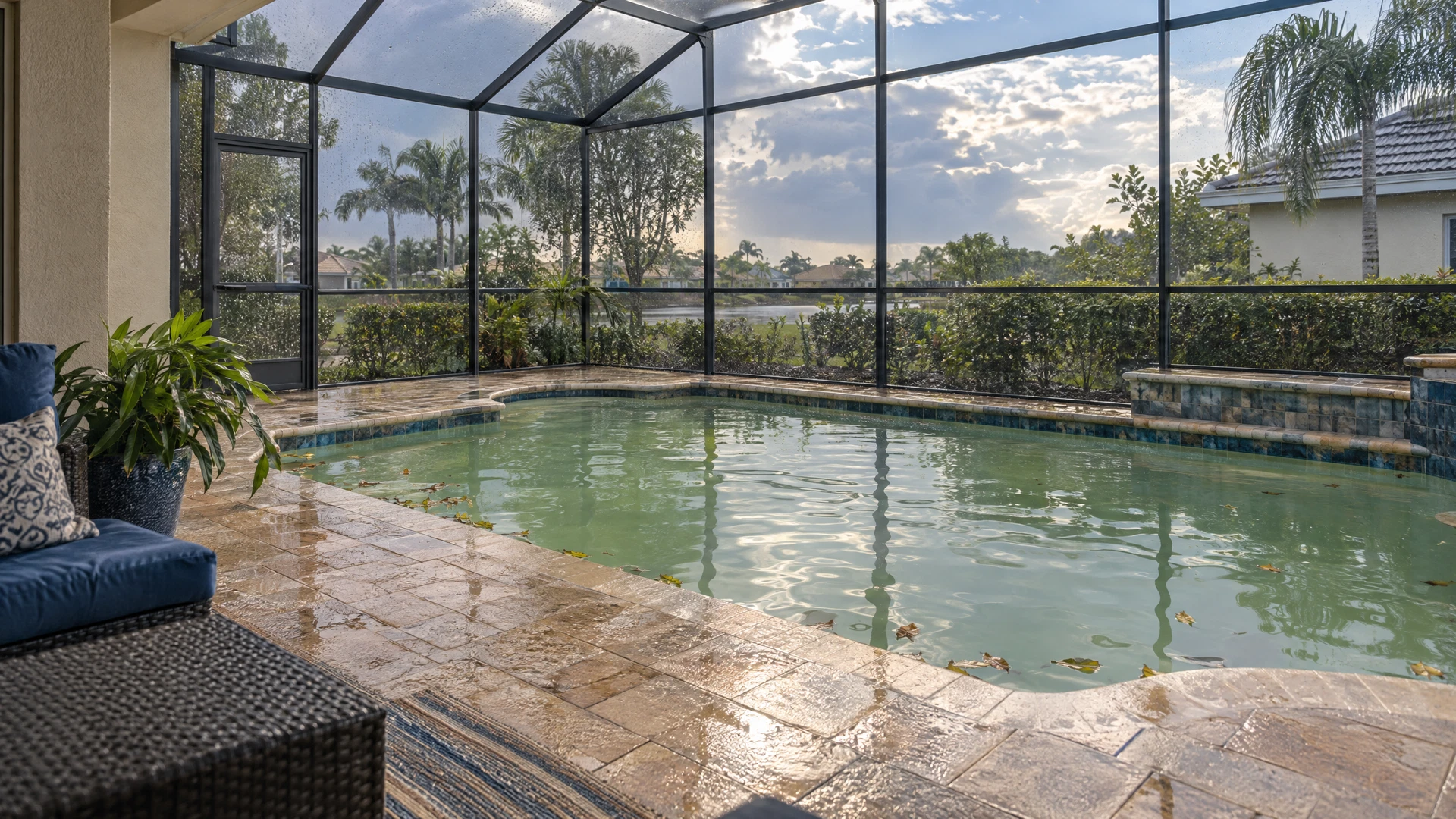
Why Your Pool Turns Green During Florida's Rainy Season (and How to Prevent It)
By Judson, owner of Manasota Pool Service | Last updated November 2026
Quick answer: Pools turn green during Florida's rainy season because heavy rain dilutes chlorine, washes in nutrients and debris that feed algae, and throws off pH, while summer heat and sunlight burn through the remaining chlorine. Algae can take hold in one to two days. Weekly service, steady circulation, and extra chlorine after big storms are the best prevention.
Why does my pool turn green after it rains?
A green pool is almost always algae. In Southwest Florida's rainy season, roughly June through September, several things work against your pool at once:
- Rain dilutes chlorine. A heavy afternoon storm can add inches of water, lowering your chlorine level.
- Runoff adds nutrients. Rain washes dirt, leaves, fertilizer and pollen into the pool. Those contain phosphates and nitrates that algae feed on.
- pH shifts. Rainwater can change the balance of your water, making chlorine less effective.
- Heat speeds everything up. Warm water, often in the upper 80s, is ideal for algae growth.
- Sunlight burns off chlorine. Florida's strong UV breaks down chlorine quickly, especially in unscreened pools.
How fast can a pool turn green in Florida?
In summer, a pool can go from clear to cloudy to green in 24 to 48 hours if chlorine drops too low. That's why skipping even one week of service, or having the pump stop during a power outage, can lead to a green pool.
How do you prevent a green pool in the rainy season?
- Keep weekly service on schedule. Regular testing catches low chlorine before algae starts.
- Run your pump long enough. In summer, most pools need longer daily run times to keep water circulating and filtered.
- Add chlorine after big storms. A boost after heavy rain helps restore levels.
- Keep the water level normal. Lower an overfilled pool so the skimmer works properly.
- Brush the walls and steps. Brushing breaks up algae before it can cling to surfaces.
- Clean the filter regularly. A clogged filter can't trap the particles algae thrives on.
- Trim nearby plants. Less debris means fewer nutrients in the water.
Is a green pool safe to swim in?
No. A green pool means chlorine is too low to keep bacteria in check, and algae can make surfaces slippery and hide the bottom of the pool, which is a drowning risk. Wait until the water is clear and chemically balanced.
How do you fix a green pool?
- Remove leaves and debris.
- Test and balance pH.
- Shock the pool with a heavy dose of chlorine.
- Brush every surface.
- Run the pump continuously and clean the filter often.
- Vacuum dead algae once it settles.
Light green pools may clear in a day or two. Dark green or black pools can take several days and multiple treatments. If it's severe, a professional green-to-clean service is often faster and cheaper than buying chemicals by trial and error.
Do screened pools turn green too?
Yes, though less often. Screens keep out leaves and some debris, but rain still gets in and dilutes chlorine. Screened pools still need regular testing in the rainy season.
Keep your pool clear all summer in Englewood and South Venice
Manasota Pool Service keeps pools in Englewood, Manasota Key and South Venice clear through the rainy season with weekly testing, balancing and cleaning. You'll have the same technician at the same time every week, chemicals included for normal use, and a photo report after every visit so you can see your pool is clear.
Get a free quote or see our plans.
Frequently asked questions
Why does my pool turn green after a storm?
Rain dilutes chlorine and washes in nutrients that feed algae, while heat speeds algae growth. Algae can bloom in a day or two.
How long does it take a pool to turn green in Florida?
In summer, as little as 24 to 48 hours once chlorine drops too low.
Can I swim in a green pool?
No. Low chlorine allows bacteria to grow, and cloudy water hides the pool floor, which is a safety hazard.
Should I add chlorine after it rains?
After heavy rain, yes. A chlorine boost helps restore levels diluted by the storm.
How do I prevent algae in my pool during summer?
Keep weekly service, run the pump long enough each day, brush surfaces, clean the filter, and add chlorine after big storms.